
Chronic Kidney Disease: Soya Plays a Role
CHRONIC KIDNEY DISEASE (CKD) IN SOUTH AFRICA
-
10% of the World’s population has some degree of CKD
-
5 million South Africans older than 20 years have CKD
-
In Black South Africans the figure is even higher
-
SA statistics show that hypertension in Blacks and diabetes in Whites and Asians are the main causes of CKD and CKF in SA
-
In SA lifestyle aberrations are direct contributors to the development of CKD, e.g.:
-
Excessive salt
-
Excessive calories
-
Obesity
FUNCTIONS OF THE KIDNEY:
- Remove waste products from the body
- Balance the body’s fluids
- Release hormones that regulate blood pressure
- Produce an active form of Vitamin D (1,25 dihydroxy vitamin D) that promotes strong, healthy bones
- Control the production of red blood cells (erythropoeisis)
DEFINITIONS
CKD is defined as…
- abnormalities of kidney structure or function
- present for ≥3 months
- with implications for health
Markers of kidney damage (one or more):
- Albuminuria (AER ≥30 mg/24 hours; ACR ≥ 30 mg/g ≥ 3 mg/mmol])
- Urine sediment abnormalities
- Electrolyte & other abnormalities due to tubular disorders
- Abnormalities detected by histology
- Structural abnormalities detected by imaging
- History of kidney transplantation
Decreased GFR :
GFR <60 ml/min/1.73 m² mandatory diagnostic!!
(GFR categories G3a–G5)
CKD is classified based on…
- Cause
- GFR category
- and albuminuria category
CHRONIC KIDNEY FAILURE (CKF) is defined as either:
- A level of GFR to <15ml/min/1.73m²
- Usually accompanied by the signs and symptoms of uraemia
OR
- A need for initiation of RENAL REPLACEMENT THERAPY (dialysis / transplantation) for treatment of complications of decreased GFR, which would otherwise increase the risk of morbidity and mortality
(NB: kidney transplant patients should not be included in the definition of kidney failure unless they have a GFR of < 15ml/min/1.73m²)
STAGES OF CKD
| Stage | Description | GFR (ml/min/1.73m²) |
|---|---|---|
| 1 | Kidney damage with normal or ↑ GFR | ≥ 90 |
| 2 | Kidney damage with mild ↓GFR | 60-89 |
| 3a | Mildly to moderate ↓GFR | 45-59 |
| 3b | Moderate to severely ↓GFR | 30-44 |
| 4 | Severe ↓GFR | 15-29 |
| 5 | Kidney failure | <15 (or dialysis) |
CAUSES OF CKD
- Diabetes type 1 and 2
- Hypertension
- Genetics: eg polycystic kidney disease (most common); Alport’s Syndrome; primary hyperoxaluria; cystinuria; kidney stones.
- Congenital: failure of urine-tube to work properly resulting in urine refluxing to the kidneys => infections and kidney damage
- Glomerulonephritis (inflammation of the glomeruli) – can happen suddenly (eg after a strep throat) and may improve / worsen over years
- Drugs: OTC pain-killers; other medications; toxins; pesticides and ‘street” drugs such as heroin and crack
- Insulin Resistance (Journal of Renal Nutrition March 2015)
Insulin Resistance causes the vascular complications associated with CKD:
- Alteration of endothelial function
- accelerated atherosclerosis
- Inflammation (cause AND consequence of IR)
- Catabolic effect of IR on protein metabolism
SYMPTOMS OF CKD
- Non-specific
- Usually only picked up during routine screening OR when one of the complications of CKD (eg. CVD, anaemia, pericarditis) is identified
- Feeling generally unwell
- Possible reduced appetite
SYMPTOMS OF ESRD
- Hypertension
- Uraemia (nausea, loss of appetite, taste changes)
- Hyperkalaemia
- Fluid volume overload (mild oedema through to life-threatening pulmonary oedema)
- Hyperphosphataemia
- Hypocalcaemia due to dihydroxyvitamin D3 deficiency
- Metabolic acidosis
- Atherosclerosis and CVD
TREATMENT TIPS
- GENERAL:
- Increase physical activity
- Low protein diets with use of ketoanalogues
- Reduce fat mass especially visceral fat
- CKD-SPECIFIC
- Correct metabolic acidosis
- Correct Vit D deficiency
- Correct anaemia
- Start / intensify dialysis
- Correct inflammation
DIETARY TIPS: It is essential to involve a Registered Dietician in the dietary treatment
- Prevent further kidney damage from occurring.
- Improve blood values to within normal limits, especially:
- GFR
- Urea
- Creatinine
- Improve energy levels, through stabilizing blood glucose (sugar) levels
| Dietary Goal | Practical | Comment |
|---|---|---|
| Eat regular meals | 3 small meals: B, L, S + 3 small snacks | Have water in-between meals and snacks |
| Carbohydrates: - low GI (avoid high GI) - soluble fibres (avoid insoluble fibres) | Include at each meal and snack | Low GI foods eaten every 3-4 hours will sustain blood glucose and thus energy levels, thereby speeding up metabolism. Mostly exclude all refined starches and high sugar foods |
| Fibre: 23g fermentable fibre / day | Include a source of fermentable fibre at each meal and snack 4-5 servings of fruits and veg/day | NB: see *list of good sources of fermentable fibre below. Lowers urea, creatinine Reduces inflammation |
| Proteins: restrict (1 Protein portion = 7g protein see Exchange List) | Spread throughout the day as per suggested menu | Lean: remove fat from meat, skin from chicken Low fat cooking methods |
| Fats: - minimize intake of all high fat foods - use small amounts of mono-unsaturated fats | Monounsaturated fats include: olive / canola oil; olives Read food labels: <5g fat/serving | Avoid animal fats (fat on meat, skin on the chicken) Use low fat cooking methods: grill / steam / stir-fry / casserole |
| Salt (sodium): use sparingly 1500mg sodium/day | Use a little / none in cooking; none at table | Avoid processed foods and canned foods and sauces due to high salt/sodium content |
| Supplements: - Multivitamin & multi-mineral - Omega-3 | StaminoGro/Food-State / Centrum Optimega / Food-State Omega-3 | /day 3 capsules/day |
| Water: 2l / day | Throughout day | |
| Exercise | 2-3 x/week |
Fermentable Fibre suitable for those with kidney problems:
USE OFTEN AND DAILY
| Fruits | Vegetables | Starches | Legumes | Other (K free) |
|---|---|---|---|---|
| Apples | Brussel sprouts | Italian bread | Chickpeas | Metamucil |
| Pears | Beetroot | Pumpernickel | Lentils | Fybogel |
| Cherries | Broccoli | Rye bread | Kidney beans | AIM Herbal Fibre Blend |
| Plums | Cabbage | Provitas | Butter beans | |
| Prunes– fresh | Cauliflower | Pita bread | Soy beans | |
| Garlic | Oats, rye, wheat | |||
| Leeks | Puffed wheat | |||
| Peas | Potatoes | |||
| Onions | Sweet potatoes | |||
| Pasta |
ROLE OF SOYA
- Soya products are rich in fermentable fibre. Exciting research has conclusively found that increased daily consumption of fermentable fibre by chronic kidney disease (CKD) patients reduces serum urea and creatinine levels.
- In addition, fermentable fibre intake reduces inflammation in CKD patients.
- Diabetic Kidney disease is better managed by increased intake of soy products due to its blood-glucose stabilising effect.
Patients with kidney disease need to reduce phosphorous intake. Soya Life products are all LOW in phosphorous, making them all very suitable for use in these diets.
Low Protein diets are recommended for patients in Stages 1-4 CKD (i.e. pre-dialysis). The protein in these diets must therefore be of high biological value in order that it is optimally used by the body. Soya is an excellent option for an HBV protein as it is lower in phosphorous than similar animal HBV proteins (cow’s milk, meat, chicken and fish).
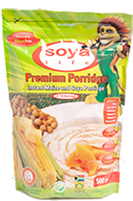
The Soya Life Porridge, Premium Porridge and Instant Meal Replacement Drink are excellent options for these diets.
HYPERTENSION AS CAUSE OF CKD
Refer to previous article July 2016.
Role of soya in treatment of hypertension:
A meta-analysis done in 2012 showed that soy (isoflavones) had an effect of lowering blood pressure in people with hypertension (high blood pressure), but not in those with normal blood pressure. |
People with hypertension should discuss the diet-based changes they are making with their Dietician, and if their blood pressure reaches or is below goal (<140/80), they could then discuss reducing their medications and maintaining their blood pressure with diet alone, with their doctor / specialist.
Comments are closed.