
A Menu for Hypertension
This is an example of a lifestyle approach to manage high blood pressure, including lifestyle changes, dietary factors and a menu example.
High blood pressure is one of the risk factors for Coronary Heart Disease (CHD); a chronic lifestyle disease. CHD is a slow process and starts with fatty deposit build up on the inner walls of the arteries of the heart and the brain. This may lead to narrowing of the arteries that supply the heart and the brain with oxygen, and this may lead to a heart attack or stroke.
Ideal blood pressure is 120/80 mmHg. If one’s blood pressure is regularly higher than 140/90, one has high blood pressure.
Risk factors contributing to an increased risk for CHD:
- High blood cholesterol
- High blood pressure
- Overweight
- Diabetes
- Smoking
- Stress
- Lack of exercise
- A family history of CHD
Recommended lifestyle changes:
- Weight management – if one is overweight, losing weight can decrease blood pressure (resulting in less medication being required)
- Regular exercise – improve fitness levels gradually (e.g. brisk walking, cycling, jogging, swimming, climbing steps, rowing, aerobic classes)
- Stop smoking
- Stress management
- Sufficient sleep
DIETARY FACTORS
Using the DASH diet approach:
EAT MORE:
- fruits and vegetables
- low-fat or nonfat dairy
- beans, SOYA**
- nuts
EAT LESS:
- fatty meats
- full-fat dairy products
- sugar-sweetened beverages
- sweets
- sodium (salt)*
*Limit salt (sodium) intake – no more than 1 tsp/day in total.
Salty facts:
- Many so-called “health foods” are high in sodium
- Most of the salt in our diet is found in processed foods
- Bread is the single highest contributor to the total salt intake of South Africans
- The World Health Organisation sees hypertension as a bigger health risk than smoking
- A high-salt diet is a leading cause of high blood pressure and high blood pressure is the single most important risk factor for stroke.
- A reduction of salt intake by 2 grams per day reduces cardiovascular events by 20%.
Cut down on salt by reading labels carefully and also by becoming aware of salt, tailoring shopping habits to lower salt content foods. The aim should be to reduce salt slowly and to look out for high-salt foods and buy alternatives instead. In time the body will adjust and eating a healthy low-salt diet will become much less of a chore – and will actually become a pleasure instead.
- Avoid food with a high sodium content:
Classification of foods by salt content
| Low in salt | Moderate in salt | High in salt | Very high in salt |
|---|---|---|---|
| Can be included in diet on a daily basis | Can be included in diet | Do not eat regularly and only eat small amounts | Avoid eating these foods |
| Oats Beans SOYA PRODUCTS* Pasta, durum wheat Cooked beef/chicken Grilled fish Peanuts, unsalted Cashew nuts, unsalted Commercial mayonnaise Olive oil Flora extra light Homemade soup Tomato sauce, small Tomato chutney Low salt beef stock Sweet & sour sauce Peanut butter, salt-free Mixed herbs Fresh and frozen vegetables Fresh fruit Soy sauce (low sodium) | Rusks Provitas Tuna in water Fish cakes, homemade Mozarella cheese Cottage cheese Homemade gravy | Commercial muesli Polony Sliced cooked ham Vienna sausages Camembert cheese Processed cheese Cheddar cheese Brick margarine Gravy, made with powder Barbeque sauce Soy sauce (regular) Bovril/Marmite Unsalted chips | Cornflakes 2 Minute Noodles Pie’s Boerewors Anchovy Smoked fish Biltong Fish cakes, commercial Salted peanuts Salted chips Nuts, salted Salted popcorn Packet soup, commercial Feta cheese Table salt All tinned products |
-
Read labels on food packages, avoid the following ingredients:
- baking powder
- baking soda
- disodium phosphate
- MSG (monosodium glutamate)
- Sodium alginate
- Sodium benzoate
- Sodium hydroxide
- Sodium nitrate (often found in smoked foods)
- Sodium proprionate
- Sodium sulfite
Practical tips:
- Add salt while preparing your food and not raw at the table.
- When tinned foods must be used, drain and rinse to remove salt.
- Use the following to flavor food:
- A slice of lemon or lemon juice
- Balsamic vinegar
- Tabasco Sauce
- Garlic, ginger, peppers, dry mustard, pepper, onion, mushrooms, tomatoes, parsley
- Moderate amounts of wine and fruit juice can be added to meat
- Fresh herbs like turmeric, oregano, rosemary and marjoram
- Some spices like curry and cinnamon can also be used, check the label for sodium content.
SOYA
Isoflavones — a compound found in soy foods — may help lower blood pressure.
It has been shown that those who consume high amounts of isoflavones per day (more than 2.5 milligrams [mg]) can reduce blood pressure.
In practical terms: 1 cup (250ml) soy milk has about 22 mg of isoflavones; and 100 grams of roasted soybeans has 130 mg of isoflavones.
MENU IDEAS
| Meal | Non-Vegetarian | Vegetarian |
|---|---|---|
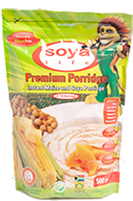
| Breakfast (alternative: Cholesterol-lowering Smoothie) | 250ml Soya Life Porridge / Oats porridge + 2 scoops Soya Life porridge + Soya life milk / skim milk (optional: add in 1Tbs seed mix) OR 2 slices low GI bread (toast) + 1 boiled / poached egg / cottage cheese and avocado / sardines PLUS: 1 fresh Fruit | 250ml Soya Life Porridge / Oats porridge / High Fibre cereal + Soya life milk / skim milk (optional: add in 1Tbs seed mix) OR 2 slices low GI bread (toast) + hummus / avocado / peanut butter PLUS: 1 fresh Fruit |
| Mid-morning snack | 1 fresh fruit | 1 fresh fruit |
| Lunch | 2 slices low GI bread + low fat filling (low fat cheese / lean chicken / tuna mayo / lean cold meat / hummus) + salad (incl. 3-bean salad) / soup OR Leftovers from previous night’s dinner OR Soya Life Instant Meal replacement Drink: 250ml | 2 slices low GI bread + low fat filling (hummus / egg / cottage cheese / soya patty) OR Leftovers from previous night’s dinner OR Soya Life Instant Meal replacement Drink: 250ml |
| Mid-afternoon snack | 1 fresh fruit | 1 fresh fruit |
| Supper | ½ -1 cup cooked rice / pasta OR 3 baby potatoes + palm-size portion lean meat / chicken OR hand-size portion baked fish (add beans or lentils) + 3 x different coloured vegetables | ½ -1 cup cooked rice / pasta OR 3 baby potatoes + ⅓ cup beans / lentils / chickpeas OR soya strips / patties OR low fat cheese + 3 x different coloured vegetables |
| Extra tips | Drink 6-8 glasses water/day Limit salt intake |
Comments are closed.